
Lakshya Steel is a trusted titanium products supplier in India, supplying sheets, plates, pipes, tubes, flanges, fittings, fasteners, bars and engineered components for industrial and project requirements. The range includes commercially pure titanium grades and widely used alloys selected for their low weight, corrosion resistance and mechanical strength. Buyers comparing material options can review Titanium Grade 2 products for chemical processing, marine and heat-exchanger applications, or explore Titanium Grade 5 products where higher strength is required. Lakshya Steel also supplies titanium sheets and plates, titanium rods and bars, and titanium pipes, tubes, flanges and fittings in different grades, sizes and specifications. These products are used across aerospace, marine, oil and gas, chemical processing, power generation, desalination and fabrication projects. Since every application may require a different grade, dimensional standard, surface finish, tolerance, testing method or certificate, buyers should share the complete technical requirement before ordering. Submit the required grade, product form, size, quantity, standard and delivery location through the request-a-quote form to receive a product-specific offer.
Titanium Products Available
Start with the grade family and then choose the required product form. Each linked page should contain the detailed sizes, manufacturing type, standard, testing and ordering information for that product.
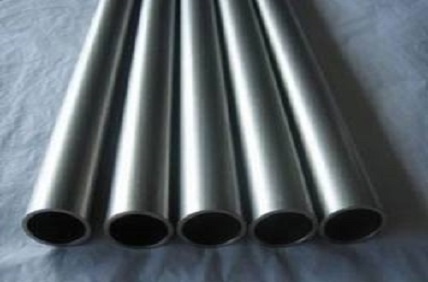
Titanium Grade 2 / 5 / 3 / 7 Products
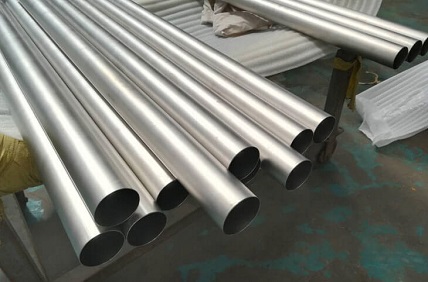
Titanium Grade 2 Products

Titanium Grade 5 Products
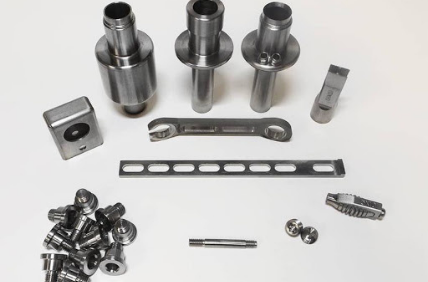
Titanium Components
What Are Titanium Products?
Titanium products include commercially pure titanium grades and titanium alloys supplied as flat products, long products, piping products, forgings and machined components. The material is valued where corrosion resistance, low density or a high strength-to-weight ratio matters, but those benefits do not make every grade suitable for every service condition.
Commercially pure Grades 1 to 4 obtain different strength levels mainly through controlled interstitial content. Grade 5 is the Ti-6Al-4V alpha-beta alloy, while Grade 7 is based on commercially pure titanium with a small palladium addition for improved performance in selected reducing-acid and crevice-corrosion conditions. Final selection should consider the process medium, temperature, pressure, load, fabrication route and governing standard.
Titanium Grade Selection Guide
|
Grade |
UNS |
Material type |
Selection direction |
Typical application direction |
|
Grade 2 |
UNS R50400 |
Commercially pure titanium |
Good balance of corrosion resistance, formability, weldability and moderate strength |
Chemical processing, marine piping, heat exchangers and fabricated equipment |
|
Grade 3 |
UNS R50550 |
Commercially pure titanium with a higher strength level than Grade 2 |
Use when greater strength is required while retaining useful corrosion resistance and fabrication characteristics |
Pressure-containing and industrial components subject to the applicable product standard |
|
Grade 5 |
UNS R56400 |
Ti-6Al-4V alpha-beta alloy |
High strength-to-weight ratio; properties depend strongly on product condition and heat treatment |
Aerospace, high-load components, subsea equipment and performance-critical parts |
|
Grade 7 |
UNS R52400 |
Commercially pure titanium with 0.12-0.25% palladium |
Selected for improved resistance in certain reducing acids and localized-corrosion conditions |
Chemical processing equipment, piping and heat-transfer duties after media compatibility review |
Selection note: Grade names alone are not a complete purchase specification. State the product form, ASTM or ASME standard, condition, dimensions, tolerance, testing and certification requirements in the enquiry.
Titanium Product Forms and Applicable Standards
|
Product form |
Common material standard |
RFQ guidance |
|
Sheet, strip and plate |
ASTM B265 / ASME SB265 |
State grade, thickness, width, length, surface condition and flatness or tolerance requirements. |
|
Bars and billets |
ASTM B348 / ASME SB348 |
State grade, diameter or section, condition, length, tolerance and testing. |
|
Seamless pipe |
ASTM B861 / ASME SB861 |
State grade, NPS or OD, wall thickness or schedule, length, end condition and test requirements. |
|
Welded pipe |
ASTM B862 / ASME SB862 |
State grade, dimensions, weld requirements, heat treatment, inspection and testing. |
|
Condenser and heat-exchanger tube |
ASTM B338 / ASME SB338 |
State whether seamless or welded, OD, wall thickness, length, grade and heat-transfer service. |
|
Forgings and flanges |
ASTM B381 / ASME SB381 |
State grade, forging type, size, class, facing, dimensions and applicable dimensional standard. |
|
Welding fittings |
ASTM B363 / ASME SB363 |
State grade, fitting type, size, schedule, manufacturing route and inspection requirement. |
|
Wire |
ASTM B863 |
State grade, diameter, condition, spool or straight length and intended processing route. |
Standards note: The latest project specification and purchase order govern acceptance. ASTM and ASME references are product-form specific and should not be applied as one common specification across all titanium products.
Titanium Grade Designations and Chemistry
|
ASTM grade |
UNS |
Common description |
Reference chemistry, weight % |
|
Grade 2 |
R50400 |
Commercially pure titanium |
Fe 0.30 max.; O 0.25 max.; N 0.03 max.; C 0.08 max.; H 0.015 max.; Ti balance |
|
Grade 5 |
R56400 |
Ti-6Al-4V |
Al 5.5-6.75; V 3.5-4.5; Fe 0.40 max.; O 0.20 max.; N 0.05 max.; C 0.08 max.; H 0.015 max.; Ti balance |
|
Grade 7 |
R52400 |
Commercially pure titanium with palladium |
Pd 0.12-0.25; Fe 0.30 max.; O 0.25 max.; N 0.03 max.; C 0.08 max.; H 0.015 max.; Ti balance |
Chemistry note: These values are concise reference limits for common ASTM grades. The heat-specific Mill Test Certificate and the exact product standard control final acceptance. Do not use a website table as a substitute for the purchase specification or MTC.
Titanium Grade 2 vs Grade 5 vs Grade 7
|
Selection factor |
Grade 2 |
Grade 5 |
Grade 7 |
|
Material family |
Commercially pure titanium |
Alpha-beta titanium alloy |
Commercially pure titanium with palladium |
|
Relative strength |
Moderate |
Highest of the three |
Similar basic strength class to Grade 2 |
|
Formability |
Generally better than Grade 5 |
Lower than Grade 2; fabrication needs tighter process control |
Comparable general fabrication direction to Grade 2 |
|
Corrosion-selection focus |
General industrial, marine and oxidizing-service duties after compatibility review |
Strength and weight reduction rather than universal corrosion superiority |
Selected reducing-acid and crevice-corrosion duties after media review |
|
Typical buying decision |
Choose when corrosion resistance and fabrication are the main priorities |
Choose when load, fatigue and weight are more important |
Choose when Grade 2 strength is suitable but the chemistry calls for added localized-corrosion resistance |
Industries We Serve
- Chemical processing: Titanium pipes, tubes, sheets, plates, flanges and components are considered for reactors, vessels, piping, pumps and heat exchangers after compatibility is checked against the exact chemical concentration and temperature.
- Marine and offshore: Grade 2 and other specified grades are used for seawater piping, cooling systems, heat-transfer equipment and offshore components where the project requires resistance to marine exposure.
- Heat exchangers and condensers: Titanium tubing and plate products are used in equipment handling seawater, brackish water or selected process fluids, subject to the heat-transfer design and tube specification.
- Aerospace and defence: Grade 5 and other aerospace-approved titanium alloys are selected for parts where high specific strength, fatigue performance and controlled material quality are important.
- Oil and gas: Titanium may be specified for selected offshore, subsea and process duties where weight, chloride exposure or corrosion conditions support its use.
- Medical and precision engineering: Approved titanium grades are used for medical and precision components, but the required implant, medical-device or customer specification must be stated separately from general industrial standards.
- Power generation and desalination: Titanium products are considered for condenser, cooling-water, brine and heat-recovery systems exposed to seawater or chloride-bearing media.
Testing and Documentation
The required inspection and documentation should be agreed before production or dispatch. Depending on the grade, product form and project, the order may call for a Mill Test Certificate, chemical analysis, tensile testing, dimensional inspection, ultrasonic or surface examination, hydrostatic or pneumatic testing for piping products, positive material identification, heat-number traceability and third-party inspection.
Any aerospace, medical, defence or other controlled application may require specifications beyond standard commercial ASTM or ASME supply. State the customer specification, approved source requirement, quality plan and inspection hold points in the enquiry.
Request a Titanium Products Quote
For a product-specific offer, share the titanium grade, product form, ASTM, ASME, EN or customer standard, dimensions, quantity, condition, tolerance, testing, certification and delivery location. A drawing should be attached for machined, forged or engineered components.
|
Enquiry Field |
Recommended Input |
|
Name |
Required |
|
Company Name |
Required |
|
Email Address |
Required |
|
Phone Number |
Required |
|
Requirement / Message |
Grade, product form, standard, size, quantity, testing and destination |
|
Drawing Upload |
Recommended for custom components, forgings and project-specific parts |
