
Titanium Products
Titanium products represent a revolutionary class of materials known for their exceptional strength-to-weight ratio, outstanding corrosion resistance, and remarkable versatility across diverse industrial applications. As a trusted titanium supplier and leading titanium manufacturer, Lakshya Steel has established itself among the premier titanium alloy suppliers in India, consistently delivering superior titanium products that meet the most stringent quality standards. Our commitment to excellence in titanium alloy production, combined with competitive titanium price per kg offerings, positions us as the preferred choice for clients seeking reliable titanium supplier services across various industries.
Titanium Manufacturer, Suppliers & Exporters in India
Our titanium products are crafted using premium materials and rigorously tested to meet stringent industry standards. As trusted exporters of titanium, we maintain extensive inventory with various sizes, specifications, and compositions to cater to diverse applications. Whether you require titanium equipment for aerospace, oil and gas, or marine applications, we offer products in multiple grades, including commercially pure titanium and popular alloys like Ti-6Al-4V, backed by our expertise in titanium alloy production.
Contact Lakshya Steel today to explore our comprehensive range of titanium products and discover ideal solutions for your business. Our expertise as leading titanium alloy suppliers and commitment to customer satisfaction make us your trusted partner for all titanium product requirements.
Titanium Products List
We offer a comprehensive range of titanium products designed to meet diverse industrial needs across aerospace, marine, chemical processing, and medical sectors.
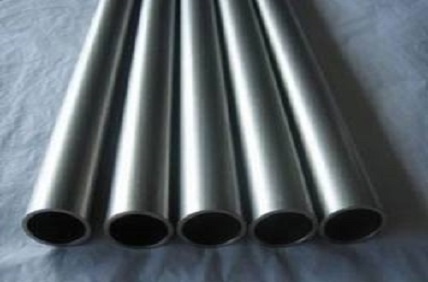
Titanium Grade 2 / 5 / 3 / 7 Products
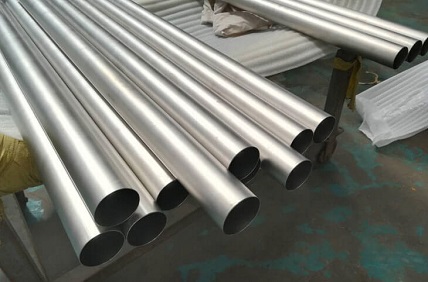
Titanium Grade 2 Products

Titanium Grade 5 Products
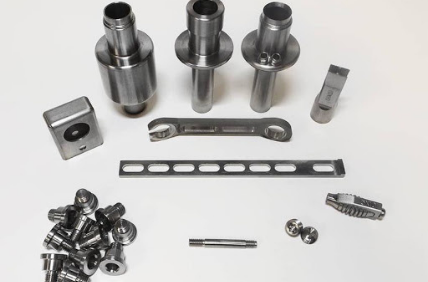
Titanium Components
What is Titanium Alloy?
Titanium alloys are advanced metallic materials combining pure titanium with other elements to enhance specific properties such as strength, corrosion resistance, and high-temperature performance. These titanium alloy manufacturers create specialized compositions that outperform pure titanium in demanding industrial applications while maintaining the metal’s inherent advantages.
Grades of Titanium Alloy
Titanium alloys combine pure titanium with other elements to enhance strength while retaining excellent corrosion resistance. Pure titanium (Grades 1–3) offers superb corrosion resistance and ductility but lower strength. Alpha–beta alloys, created by alloying titanium with elements like aluminum and vanadium, deliver higher strength and heat stability for demanding applications.
|
Grade |
Description |
Typical Applications |
|
Grade 1 |
Commercially pure titanium with the highest ductility and corrosion resistance |
Plate heat exchangers |
|
Grade 2 |
Good balance of strength, formability, and weldability |
Piping systems |
|
Grade 3 |
Higher strength than Grade 2 while retaining good corrosion resistance |
Shell-and-tube heat exchanger matrix plates |
|
Grade 5 |
Ti-6Al-4V alpha-beta alloy offering superior strength and heat resistance up to 600 °F |
Aerospace components, subsea equipment |
|
Grade 7 |
Enhanced corrosion resistance in both reducing and oxidizing environments |
Chemical processing equipment |
|
Grade 9 |
Combines high strength with excellent corrosion resistance |
Hydraulic piping, offshore applications |
|
Grade 11 |
Similar corrosion resistance to Grade 7 with excellent formability |
Deep-drawn components |
|
Grade 12 |
Improved heat resistance compared to pure titanium; suitable for high-temperature tubing |
Heat exchanger tubing |
Equivalent Grades for Titanium
|
STANDARD |
WERKSTOFF NR. |
UNS |
|
Ti Grade 2 |
3.7035 |
R50400 |
|
Ti Grade 5 |
3.7165 |
N56400 |
|
Ti Grade 3 |
3.7055 |
R50550 |
|
Ti Grade 7 |
3.7165 |
N56400 |
Chemical Properties of Titanium
The chemical properties of titanium alloys determine their corrosion resistance, reactivity, and compatibility with various environments and substances. These properties are fundamental considerations for titanium alloy production and application selection in critical industries.
| CHEMICAL COMPOSITION | ASTM Grade | ||||||
|---|---|---|---|---|---|---|---|
| Element | 1 | 2 | 5 | 7 | 9 | 12 | 23 |
| N, Nitrogen | 0,03 | 0,03 | 0,05 | 0,03 | 0,02 | 0,03 | 0,03 |
| C, Carbon | 0,1 | 0,1 | 0,1 | 0,1 | 0,05 | 0,08 | 0,08 |
| H, Hydrogen | 0,015 | 0,015 | 0,0125 | 0,015 | 0,013 | 0,015 | 0,0125 |
| Fe, Iron | 0,2 | 0,3 | 0,4 | 0,3 | 0,25 | 0,3 | 0,25 |
| O, Oxygen | 0,18 | 0,25 | 0,20 | 0,25 | 0,12 | 0,25 | 0.13 |
| Pd, Palladium | – | – | – | 0,12-0,25 | – | – | – |
| Al, Aluminium | – | – | 5,5-6,75 | – | 2,5-3,5 | – | 5,5-6.5 |
| Mo, Molybdenum | – | – | – | – | – | 0,2-0,4 | – |
| V, Vanadium | – | – | 3,5-4,5 | – | 2,0-3,0 | – | 3,5-4,5 |
| Ni, Nickel | – | – | – | – | – | 0,6-0,9 | – |
| Ti, Titanium | Bal. | Bal. | Bal. | Bal. | Bal. | Bal. | Bal. |
Mechanical Properties of Titanium
Mechanical properties including tensile strength, yield strength, elongation, and hardness define the performance characteristics of titanium alloys under various loading conditions. Understanding these properties is essential for titanium manufacturers to optimize material selection and processing parameters.
| MECHANICAL COMPOSITION | ASTM Grade | ||||||
|---|---|---|---|---|---|---|---|
| Grade 1 | Grade 2 | Grade 5 | Grade 7 | Grade 9 | Grade 12 | Grade 23 | |
| Tensile strength, min (Mpa) | 240,00 | 345,00 | 895,00 | 345,00 | 620,00 | 483,00 | 828,00 |
| Yield strength, 0,2% Offset, min (Mpa) | 170,00 | 275,00 | 825,00 | 275,00 | 483,00 | 345,00 | 759,00 |
| Elongation (in 4D, min, %) | 24,00 | 20,00 | 10,00 | 20,00 | 15,00 | 18,00 | 10,00 |
| Reduction of Area, min, % | 30,00 | 30,00 | 25,00 | 30,00 | 25,00 | 25,00 | 15,00 |
| Hardness * Interpolated | Rb70 | Rb80 | Rc36 | Rb80 | Rc28 | Rc17* | |
Melting Point of Titanium
Titanium exhibits exceptional heat resistance with a melting point of 1668°C (3034°F), making it suitable for high-temperature applications where other metals would fail. This thermal stability is a key factor driving demand from titanium alloy suppliers in aerospace and industrial sectors.
Melting Points of Titanium Alloys
| Metal | Metal Melting Point (°C) |
|---|---|
| Aluminum | 660 |
| Brass | 930 to 1000 |
| Cobalt | 1495 |
| Copper | 1084 |
| Lead | 327.5 |
Uses of Titanium Alloy
Titanium’s exceptional blend of light weight, strength, corrosion resistance, and biocompatibility makes it indispensable across many sectors:
- Aerospace and Aviation: Favored for aircraft components such as landing gear, wings, and engine parts due to its superior strength-to-weight ratio, corrosion resistance, and high-temperature stability.
- Medical Implants: Chosen for hip and knee prosthetics, dental implants, and pacemaker enclosures because of its compatibility with the human body and resistance to bodily fluids.
- Marine and Offshore: Utilized in shipbuilding, oil and gas platforms, and offshore wind turbines for its outstanding performance in saltwater environments.
- Sports Equipment: Preferred for golf club heads, bicycle frames, and tennis racket frames thanks to its lightweight yet durable nature.
- Chemical Processing: Employed in tanks, valves, and pump components where resistance to aggressive chemicals is essential.
- Architecture and Construction: Increasingly specified for cladding, roofing, and building facades, offering both aesthetic appeal and long-term durability.
Titanium Alloy Price List
Current titanium price per kg varies based on grade, quantity, and market conditions, with factors such as raw material costs and processing complexity influencing the overall titanium price structure. Transparent pricing from reliable titanium suppliers ensures competitive procurement for industrial buyers.
To get the detailed pricing information about Titanium Alloy, contact us right away!
Titanium Alloy Production in India
India represents a significant player in the global titanium industry, backed by substantial mineral reserves and growing production capabilities. The nation’s titanium sector is experiencing steady expansion, driven by rising demand from critical industries including aerospace, automotive, medical devices, and defense applications. Strategic investments in processing facilities and technology development are positioning India to enhance domestic production while reducing import dependency.
|
Metric/Aspect |
Value/Details |
|
Global Titanium Producer Rank |
9th largest in mineral production (210K tonnes) |
|
Annual Market Size (2024) |
USD 679.1 million |
|
Market Growth Rate (2025–2030 CAGR) |
~4.94% |
|
Titanium Sponge Production Capacity |
500 tonnes per year |
|
Current Titanium Sponge Production |
~260 tonnes per year |
|
Titanium Ore Exports (2023) |
USD 130 million |
|
Titanium Ore Imports (2023) |
USD 70.8 million |
|
Ilmenite Reserves |
629.57 million tonnes |
|
Rutile Reserves |
33.95 million tonnes |
|
Odisha’s Share of National Ilmenite |
~24% (150.62 MT out of 629.57 MT) |
Global Titanium Alloy Production
Titanium alloy production represents a specialized segment within the broader titanium industry, characterized by advanced manufacturing processes and high-value applications. The global distribution of titanium alloy production reflects technological capabilities, established aerospace industries, and strategic material processing infrastructure. Currently, the leading titanium alloy-producing nations contribute significantly to meeting worldwide demand for these critical advanced materials.
| Country | Annual Titanium Alloy Production (Thousand Tonnes) | Share of Global Production (%) |
| China | ~65-70 | ~42% |
| Japan | ~35-40 | ~23% |
| Russia | ~25-30 | ~17% |
| United States | ~15-20 | ~11% |
| Germany | ~4-6 | ~3% |
| United Kingdom | ~2-3 | ~1.5% |
| France | ~1-2 | ~1% |
| Others | ~2-3 | ~1.5% |
Frequently Asked Questions About Titanium Alloy
Is titanium alloy stronger than titanium?
Titanium alloys generally exhibit higher tensile strength and toughness compared to commercially pure titanium (Grades 1–3), owing to alloying elements like aluminum and vanadium that enhance mechanical performance while retaining corrosion resistance.
What is the most popular titanium alloy?
What products are made from titanium?
What is the difference between titanium and titanium alloy?
Is titanium alloy very strong?
Yes, titanium alloys deliver very high tensile strength, often exceeding 900 MPa while maintaining low density and excellent corrosion resistance, making them ideal for demanding aerospace, medical, and industrial applications.
